
In February 2023, my life took an unexpected turn. I woke up, only to realize that I couldn’t stand or walk. The sudden loss of mobility was alarming, and it set off a cascade of medical evaluations and tests as we sought answers.
My initial MRI scan at the emergency room indicated brain lesions. This was deeply unsettling, as doctors initially thought that the lesions might be the result of cancer metastasizing from another part of my body.
I was hospitalized, and the next few weeks were a blur of medical procedures, tests and exams. Blood tests, lumbar punctures, and various scans were performed to determine the root cause of my symptoms. Despite the exhaustive efforts, no traces of cancer were found. While this was a relief, it left us back at square one, without a definitive diagnosis.
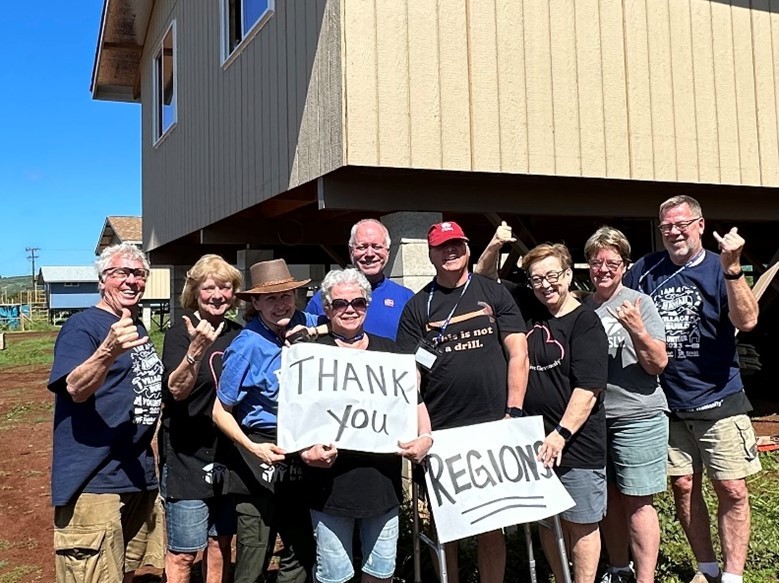
In the absence of cancer, the medical team decided to treat me with massive IV doses of steroids. These treatments aimed to reduce the inflammation in my brain and spinal cord. After a 2 ½ week hospital stay and daily therapy sessions, I was finally stable enough to be discharged despite still using a walker and wheelchair to get around. My wife and I were planning to lead a Habitat for Humanity team build in Kauai in the upcoming weeks. I told my doctors if there was any way we could still go on the trip, I wanted to go. Even though I couldn’t participate in the building, with the help of my spouse, I was cleared to travel and we joined our team mid-build.
Unfortunately, a few weeks after our return home, my symptoms returned.
I went from being able to take independent steps back to using a cane, then to using walking poles and finally back to using a walker. I went through a brain biopsy which ruled out cancer, but indicated a possible rare form of degenerative MS.
For 2 ½ months we continued to search for the root cause of my condition. My wife, Carol, got me into Mayo Clinic in Rochester, MN to meet with an MS specialist. After several more weeks of MRIs, lumbar punctures, blood tests and a review of my biopsy tissue, I was diagnosed with MOG.
The symptoms I experienced were consistent with MOG. However, most MOG patients present with optic neuritis or vision loss. My only vision issues were a slight loss on one side of my peripheral vision field. I also noticed issues with depth perception, and significant cognitive issues (paraphasia, memory, etc.).
It was at Mayo Clinic where I connected with Dr. Eoin Flanagan. Dr. Flanagan invited me to participate in a new clinical drug trial for MOG which entailed weekly infusions. I learned that MOGAD is a relatively new area of research in the field of neurology. It involves the immune system mistakenly attacking the myelin sheath, the protective covering of the brain and nerve fibers. This attack led to inflammation and damage to my central nervous system.
Since September of 2023, I have been receiving weekly infusions of Rozanolixizumab as part of the clinical trial. While I have no idea if I’m receiving the actual drug or a placebo, I’ve been relapse free since.
During my first year of dealing with MOG, I had a total of over 300 medical appointments (including tests, various doctor’s appointments, rehabilitation psychologist appointments, and physical, occupational, and speech therapy visits). Due to my continued cognitive issues (memory issues, paraphasia, etc.) I’ve had to step away from my financial planning career.
While not a direct cause, I also adopted some added stress of caring for my wife full-time after she suffered a heart attack, bypass surgery and 3-week hospital stay. Thankfully she is well on the way to recovery.
Receiving a diagnosis of MOG antibody disease has been life-changing and has given me a sense of clarity and direction. Understanding the nature of my condition has empowered me to take proactive steps in managing my health. My mobility has returned, and I’m able to live without needing physical assistance.
Our family, friends, church and co-workers have played a significant role throughout this journey. Their support has been invaluable for my recovery and ongoing management of MOGAD.
I am committed to working as a MOG advocate in the future, sharing my story with others so perhaps they can find a quicker road to diagnosis. While living with MOG presents its challenges, I am hopeful about the future. Advances in medical research and treatments continue to improve the outlook for those of us with this condition.
I believe my MOG Diagnosis Story is a testament to the power of perseverance and the importance of seeking answers in the face of uncertainty. My journey from the initial symptoms to a clear diagnosis and effective management highlights the complexities of autoimmune diseases. My wife Carol and I are optimistic about the future and are looking forward to checking off some bucket list travel destinations this coming year.
By Tim

I love this! So proud of you Uncle for not only persevering through the whole experience but also turning this into a positive that can help others.
Comments are closed.