My name is Julie Cooke. I am 62 years old and live in Magalia, (Northern) California. At the beginning of 2018, I noticed that I was having some mild eye pain upon movement and to the touch. I also developed debilitating headaches. I attributed it to long hours onInflammation of the optic nerve that may be classified as unilateral (affecting one eye) or bilateral (affecting both eyes) that may result in vision changes, vision loss, and/or pain with eye movement. my computer, working as an office administrator and bookkeeper.

In late February, the eye pain became unbearable and I decided to go to my primary care physician to get checked out. I saw him the next day and he ordered an MRIA noninvasive imaging technique that uses strong magnetic fields to produce images of nearly any structure of the body. For MOGAD, it is typically used with and without contrast to identify disease activity in the central nervous system. for later that afternoon. My PCP suspected an issue with my retina. I also made an appointment with my local eye doctor, Anthony Rudick O.D, for the following day.
That night I went to bed in severe pain and woke during the night with no vision in my left eye and diminished vision in my right.
I was scared but I knew I was in good hands with Dr. Rudick. I called and he had me come in immediately. When he tested my optic nervesThe cranial nerves that relay messages from your eyes to your brain to create visual images. These nerves extend from the retina in the back of the eyes to the part of the brain that processes what we see. In myelin oligodendrocyte glycoproten antibody disease (MOGAD), they may be the target of inflammation or lesions, sometimes causing visual disruption or blindness., the swelling was off the charts in both eyes. He was extremely concerned my vision would not be restored without going immediately to the emergency room at University of California Davis Medical Center, an outstanding teaching facility in Sacramento, about two hours away from home. He knew I had bilateralRefers to disease or attack on two sides. optic neuritisInflammation of the optic nerve that may be classified as unilateral (affecting one eye) or bilateral (affecting both eyes) that may result in vision changes, vision loss, and/or pain with eye movement. and wanted me to benefit from having a neuro-opthalmologist, and a neurology team, monitoring my case at UCD. Dr. Rudick gave me and my husband his cell number and said to text him with updates.
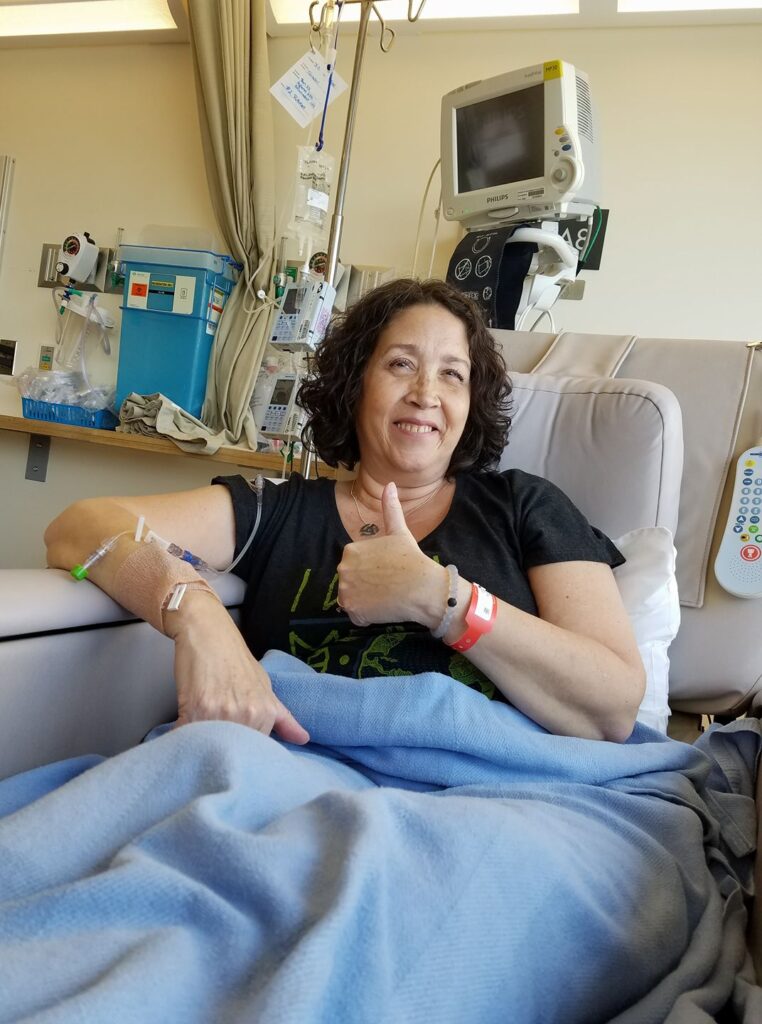
When we arrived in the ER, I went to triage and could not see the big “E” onInflammation of the optic nerve that may be classified as unilateral (affecting one eye) or bilateral (affecting both eyes) that may result in vision changes, vision loss, and/or pain with eye movement. the eye chart with my left eye and the vision in my right eye continued to worsen. Once I was in a room, a battery of tests were run, including a lumbar puncture, many visual acuity tests, multiple MRI’s, and blood work. I was admitted to the hospital that night and began a five day course of IVA way of giving a drug or other substance through a needle or tube inserted into a vein. SolumedrolA type of medication typically given intraveneously or orally. For myelin oligodendrocyte glycoprotein antibody disease (MOGAD) it is used as an immunosuppressant and anti-inflammatory to reduce disease activity and inflammation. In adults, it is sometimes used in high doses for acute attacks. In some adult patients, it may be used for 1-2 months after an acute attack to avoid a rapid onset of relapse. Higher doses (>10mg/day) are not recommended for an extended period of time but lower doses (<=10mg/day) may be used in some patients longer term. In children, it may be used after treatment of an acute attack, but it is not recommended long-term due to the profound effects of chronic steroids on a child’s health. Use of oral prednisone as a maintenance therapy in relapsing pediatric MOGAD patients is discouraged due to side effects in developing children, and other therapies such as monthly immune globulin are suggested. (To understand relapsing during steroid tapering, see Steroid Dependency). My blood work was sent to the Mayo Clinic because they suspected MOG antibody diseaseOften referred to as MOGAD, Anti-MOG, MOG Ab+, MOG Antibody Disease, MOG Associated Antibody Disease, MOG positive disease . By the final day of SolumedrolA type of medication typically given intraveneously or orally. For myelin oligodendrocyte glycoprotein antibody disease (MOGAD) it is used as an immunosuppressant and anti-inflammatory to reduce disease activity and inflammation. In adults, it is sometimes used in high doses for acute attacks. In some adult patients, it may be used for 1-2 months after an acute attack to avoid a rapid onset of relapse. Higher doses (>10mg/day) are not recommended for an extended period of time but lower doses (<=10mg/day) may be used in some patients longer term. In children, it may be used after treatment of an acute attack, but it is not recommended long-term due to the profound effects of chronic steroids on a child’s health. Use of oral prednisone as a maintenance therapy in relapsing pediatric MOGAD patients is discouraged due to side effects in developing children, and other therapies such as monthly immune globulin are suggested. (To understand relapsing during steroid tapering, see Steroid Dependency), my vision was back to its normal baseline and the swelling had subsided. The blood work came back and, as predicted, I was MOGA type of protein involved in cell adhesion. Present throughout myelin sheaths. positive and, surprisingly to me, AQP4 negative. I was officially diagnosed with NMOSDA disorder of the central nervous system that primarily affects the nerves of the eye and the spinal cord. Also known as Neuromyelitis Optica (NMO) or Devic’s Disease.
After my release from the hospital, I was set up with a neurologist and a neuro-opthalmologist at UCD. I began taking RituxanThe common brand for this drug is Rituxan. A therapeutic drug that suppresses the immune system often prescribed in certain autoimmune conditions. For myelin oligodendrocyte glycoprotein antibody disease (MOGAD), this medication is used to suppress the immune system to reduce disease activity. as my preventativeRefers to a medication or treatment that is administered to prevent future relapses (Also referred to as Preventative or Preventive Treatment). within a few months after diagnosis. I had two relapsesWhen you present to your doctor or hospital with new or worsening central nervous system symptoms. Generally, if your symptoms gradually worsen over 24-48 hours, there is heightened concern of a relapse. (Also referred to as a flare by the myelin oligodendrocyte glycoproten antibody disease (MOGAD) community). which manifested as numbness and tingling in my extremities. In both cases, the treatment was five days of outpatient IV-Solumedrol. After the second relapseWhen you present to your doctor or hospital with new or worsening central nervous system symptoms. Generally, if your symptoms gradually worsen over 24-48 hours, there is heightened concern of a relapse. (Also referred to as a flare by the myelin oligodendrocyte glycoproten antibody disease (MOGAD) community)., I consulted with my neurologist and decided to switch to Soliris. I have been taking it biweekly for just over a year now, with no relapsesWhen you present to your doctor or hospital with new or worsening central nervous system symptoms. Generally, if your symptoms gradually worsen over 24-48 hours, there is heightened concern of a relapse. (Also referred to as a flare by the myelin oligodendrocyte glycoproten antibody disease (MOGAD) community). and minimal side effects (fatigue). I currently have physical therapy twice a week that helps tremendously with strengthening and balance.
I have had a lot of time for self-reflection since my March, 2018 diagnosis. 2018 was a painful year. My Mom passed away in May and our community was devastated by the Camp Fire onInflammation of the optic nerve that may be classified as unilateral (affecting one eye) or bilateral (affecting both eyes) that may result in vision changes, vision loss, and/or pain with eye movement. the Paradise Ridge in November.
I can now look past all the pain and move into the light.
I have been showered with tremendous blessings since the day I first walked into the emergency room, scared and confused. I have found a strong and caring support system in the MOGA type of protein involved in cell adhesion. Present throughout myelin sheaths. and NMO Facebook groups, I have developed trusted relationships with my stellar medical team. I have hope in knowing there’s research happening every day that will benefit all of us. So much more is known about MOGA type of protein involved in cell adhesion. Present throughout myelin sheaths. and NMOSDA disorder of the central nervous system that primarily affects the nerves of the eye and the spinal cord. Also known as Neuromyelitis Optica (NMO) or Devic’s Disease, even since my journey began. I live my life from a place of strength and determination, knowing I have so much to live for.
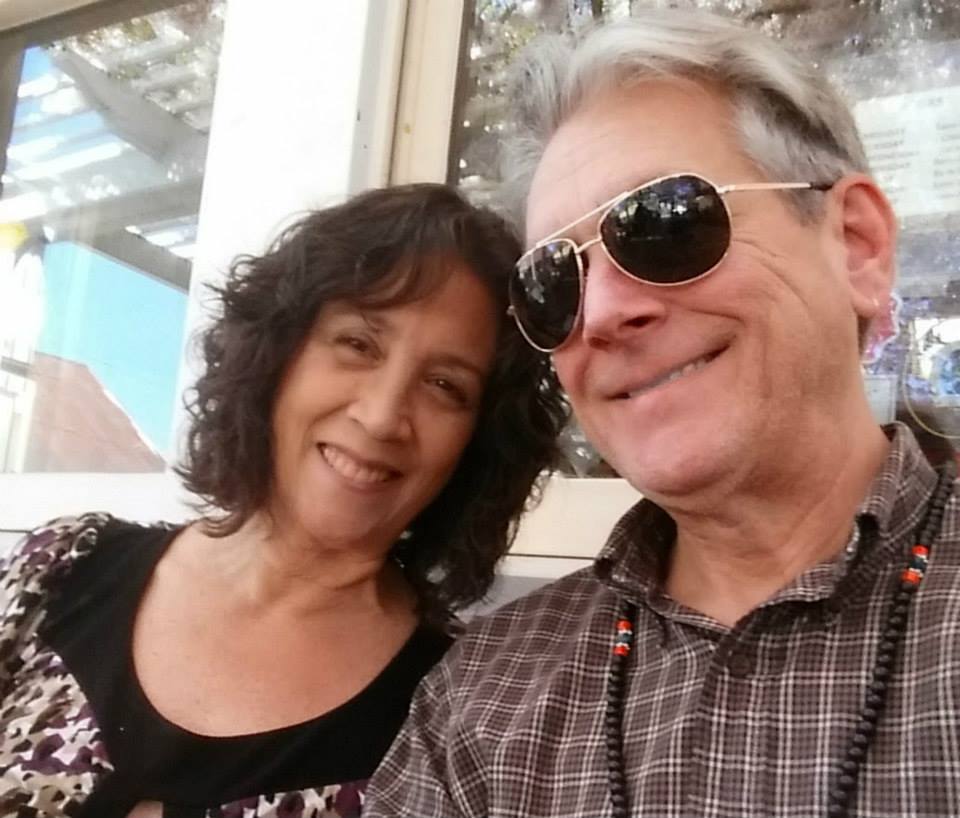
I am beyond grateful for Jay, my loving husband (and excellent caregiver) of almost forty-three years, our son Justin, daughter-in-law Samantha, granddaughter Hendrix (age three and a half), grandson August (age two), my extended family, spiritual community, and caring friends. Their love and support gives me tremendous hope and reminds me of my purpose in this life. OnInflammation of the optic nerve that may be classified as unilateral (affecting one eye) or bilateral (affecting both eyes) that may result in vision changes, vision loss, and/or pain with eye movement. days when I am not feeling well, I allow myself time to acknowledge those feelings and then I can move forward into a positive space, feeling blessed that I am not defined by any diagnosis. I have a beautiful life that I cherish each and every day.


Warrior on, my friends! Hold on to hope and stay strong.
By Julie Cooke

kNOW THAT I along with many others love you. We also know and believe that you are the strongest when it comes to over coming challenges you are the best and with the surrounding of love from Jay and your spiritual community WE WILL OERCOME.
Thank you, Sam. I truly appreciate your friendship and support. Yes, we will overcome! Much love.
Julie you are an extraordinary woman with the strength of a warrior who I admire for tour resilience and always sunny nature. We have reconnected after our long ago high school years on Facebook as I continued to read about your journey. I am proud to know you and pray and wish you forever strength, peace and happiness enough for your huge heart to hold. Thank you, JULIE for always uplifting me on my journey!!
I am grateful for our reconnection, Jennie. You have been such a kind, loving friend and I thank you so much. Sending love.
Your MOG journey mirrors my own in so many ways. I too am 62, recently diagnosed with MOG and Optic Neuritis in both eyes. I spent a month in UofM Hospital in Michigan where I received extensive testing and treatment. Unfortunately getting there cost me time and vision loss. After 6 months of incredible fear, depression and loss of my “old self”, I am starting to feel hopeful about my future. Thank you for sharing your story and giving us newbies hope!
Comments are closed.